
CEOs have a fresh opportunity to create organizations designed for long-term value. This is the moment to re-evaluate how we operate within planetary boundaries, identify what’s holding us back, and chart where we need to go next.
By Caroline Stokes, Author of AfterShock to 2030: A CEO’s Guide to Reinvention in the Age of AI, Climate, and Societal Collapse
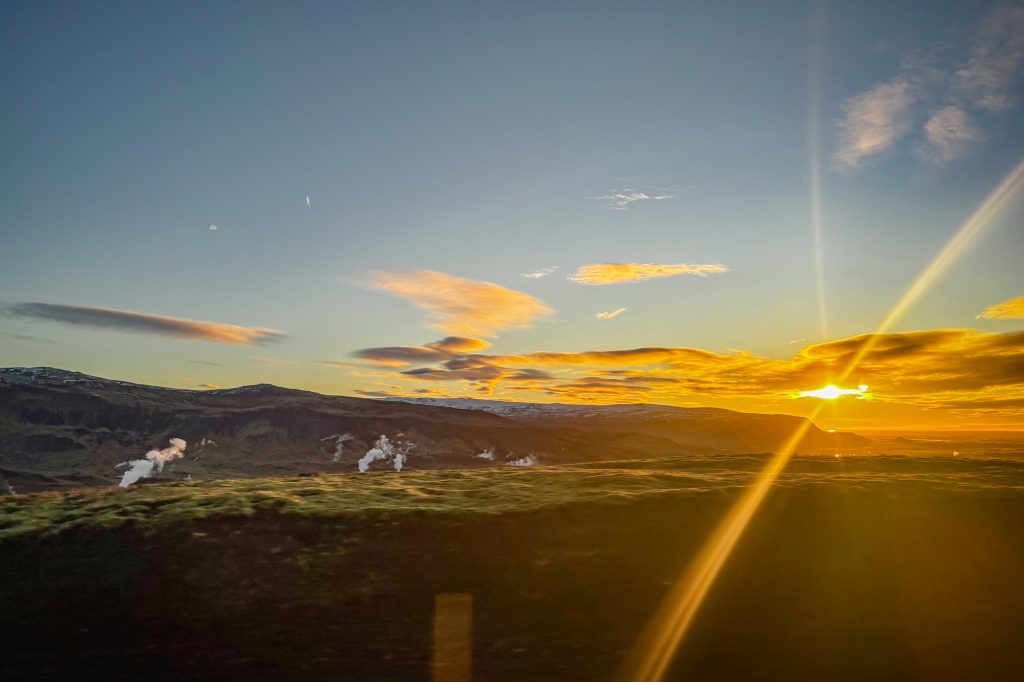
On the last leg of my recent three-country trip, I returned home to Vancouver with Icelandair and captured the most beautiful blue sky above the clouds. It was the morning after the “blue wave” election shock and, watching the clouds rush past, I felt a rare sense of renewal and wondered if a green wave might follow.
In Iceland, geothermal energy heats homes and buildings and most of the electricity comes from glacial melt. Iceland is independent and can keep its lights and radiators on without too much unrest. The rest of the world lives with daily geopolitical and energy shocks that undermine the stability and long-term confidence leaders need to create value for their customers.
So, for the first time in a few years, I allowed myself to wonder and dream about new possibilities. If the new Democratic Congress and a handful of new blue-state governors will change the odds on a few things, maybe we can collaborate in a whole new way. I found myself asking: Will Washington push to de-escalate the Iran conflict to calm oil and gas prices? And can leaders resurrect green energy projects so we can meet massive power demands while reducing pollution?
Faced with political roadblocks and dwindling incentives, those of us who advocate for a greener economy have spent years trying to sound the alarm for an audience that just wasn’t listening, despite decades of data.
But maybe this blue wave can create the beginning of a green wave? It’s amazing how a little optimism can spark new ideas and hope.
Let’s look at the reality:
Global electricity demand added roughly 800 terawatt-hours last year.
The media has been pointing fingers at data centres because they are growing fast to meet our insatiable AI needs and expectations, but buildings and industry remain the greatest users of power.
Even if cheaper fossil fuels lower bills in the short term, they will still impact our climate, worsening food scarcity and living conditions, and driving extreme temperatures that demand even more energy to heat and cool our homes and buildings. It’s a perpetual Catch-22.
At the Thinkers50 summit this month, former Ingka Group CEO Jesper Brodin talked about the steps IKEA took. The firm cut absolute carbon by about 30% while the business still grew, treated resource use as a cost rather than only a values line, and invested heavily in renewables. He encouraged other leaders to copy this system, as carbon is tied to cost, and being careful with resources is good business.
Also at Thinkers50, the author and professor of management practice, Erin Meyer, made a related point about culture. Most organizations list absolute positives, she said, but their real operating system is demonstrated through their dilemmas. A lot of US teams are living one of those dilemmas right now. People who spent the past few years watching their language because of political risk are hearing that the external pressure has changed. The habit of speaking and deciding won’t return overnight. There will be over- and under-corrections. Naming the tension explicitly is the way forward, much more so than restating that open dialogue is a value.
I’m the author of AfterShock to 2030: A CEO’s Guide to Reinvention in the Age of AI, Climate, and Societal Collapse and I was named to the Thinkers50 Radar Class of 2026. AT MIT, I studied business sustainability, AI for business strategy, and the new space economy because I want to encourage everyone to consider bold new futures at this critical inflection point. My AfterShock Labs at Canyon Ranch creates a dedicated space to time-box this strategic thinking.
This latest disruption took many by surprise, but it also creates an unexpected opening. CEOs now have a fresh opportunity to create organizations designed for long-term value. This is the moment to re-evaluate how we operate within planetary boundaries, identify the language and norms holding us back, and chart where we need to go next.
How will you blue-sky during this rare window?