The rapid convergence of AI, space and human sustainability requires leaders who are able to evolve and adapt in real time.
By Caroline Stokes, Author of AfterShock to 2030: A CEO’s Guide to Reinvention in the Age of AI, Climate, and Societal Collapse
My CB Radio handle in the 1980s was Skyliner Two. My grandfather’s was Skyliner One.
I helped him name those handles aged nine. During World War Two, my grandfather served in the RAF and later worked as an engineer at British Aerospace. On the drive home from work, we practiced CB radio communications etiquette.
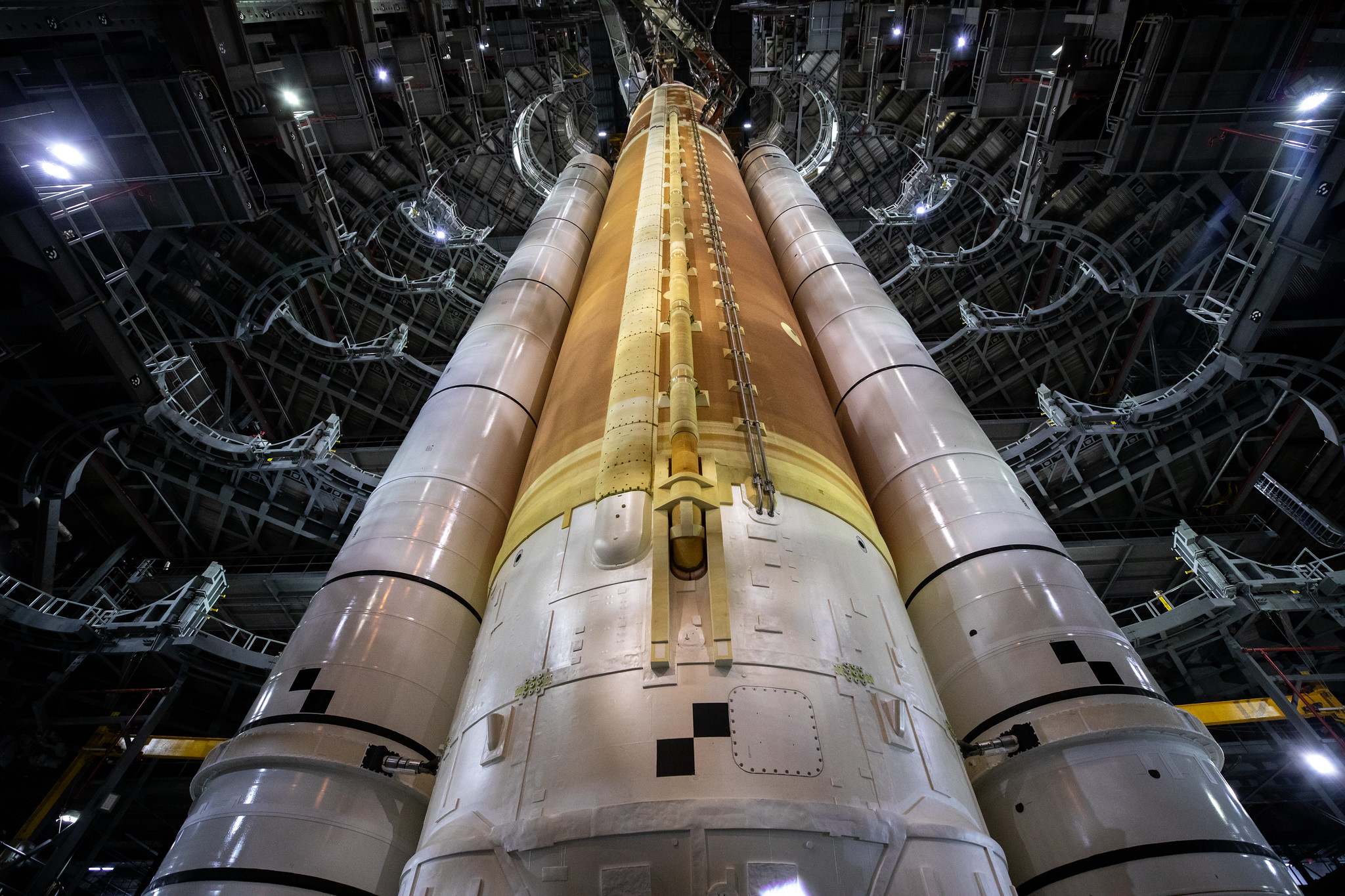
During my MIT New Space Economy course this week, I learned that the Artemis II mission would soon be testing O2O communications in lunar orbit. And just like that my nine-year-old self said “Hello” to 2026 me.
We have come a very long way, very quickly. As Mark Carney said at Davos, “Nostalgia isn’t a strategy.”
On January 29, Space X launched its 11,000th Starlink satellite into low Earth orbit. Since 2019, Starlink has been creating a megaconstellation of satellites to enable global connectivity in places internet cables and towers can’t reach. In comparison, since 1980, the European Space Agency (ESA) has launched approximately 14,450 satellites into space.
That same day, Reuters reported that Space X might merge with xAI. Just days, later the merger actually happened. In my course, we’ve been discussing when the tipping point of the space economy would accelerate. This merger signals a reality that space and AI will converge.
This is not about Planet B
Many people think the new space economy is about finding Planet B. It’s not. Programs like Artemis are a series of missions to be accomplished. New space is about the downstream benefits. When satellites go up, intelligence-as-a-service comes down, enabling organizations to assess, strategize and move to action. It’s the “what do we do with the data” part — not even reusable rockets or missions — that will be monetized as the space economy tips toward $1.8 trillion by 2035.
Take Planet Labs as one example. Their satellites hitch a ride on Starlink to provide AI-powered, real-time Earth observation information across agriculture, climate change, insurance, finance, governments and institutions, so that better decisions can be made to sustain human life.
That is not a brain drain or doomscrolling app tech. We’re finally talking about an industry that’s going to help move us forward.
What will I do about that?
The goal in my remaining working lifetime is to help leaders evolve how they think, collaborate and build, so life on this planet can prosper under increasingly challenging circumstances.
The future you’ve been thinking of, or dreading, is right here. This means you can build, rebuild and grow based on the forced constraints accumulating around you.
It’s a leader’s — any human’s — journey to evolve, learn to collaborate, innovate and create relevant products, services and organizations. Before the pandemic, we were all on a treadmill of extraction, which I discuss in my book.
What’s your moral ambition?
With technology and the climate system accelerating faster than our institutions can respond, historian and author Rutger Bregman calls for us to pivot toward moral ambition: the courage to step up and take responsibility for shaping what comes next. I wrote about the need for that CEO reinvention in AfterShock to 2030, too.
What I’m learning week by week, alongside space engineers from around the world, is that the new space economy is advancing far faster than our businesses, our organizations and ourselves are currently equipped to adapt.
The leaders who endure and shape the future won’t just upgrade their strategy deck or AI stack and hope the rest of the organization understands everything in the months to come. They’ll deliberately adapt their own nervous system, their team’s nervous system and their organization’s operating systems in parallel with cognitive and AI learning, in real time. In Chapter 20 of AfterShock to 2030, I wrote about how a Chief Coaching Officer can help their organization adapt both vertically and horizontally.
When you find yourself or your team defending the past instead of investing time in solving future problems, that’s a sign there’s considerable work to do.
AI is changing us faster.
And it’s doing so faster than most can perceive or acknowledge.
As I wrote in Chapter 8 of AfterShock to 2030, and as I discussed on my podcast with Helen Edwards of the Singularity Institute, AI is not simply changing how we work. Depending on what part of the terrain you’re on, it’s reshaping how humans think, decide, collaborate and regulate themselves inside increasingly complex systems.
Over the past year, AI data centres have increasingly been cast as the climate enemy. Accused of consuming too much electricity, water, and land, this framing is emotionally compelling, but it is also misleading.
Today, data centres account for only a small single-digit share of global electricity use, far less than housing, transport, or industrial activity.
By contrast, deforestation and land-use change still contribute roughly 10 to 15% of global greenhouse gas emissions, while simultaneously destroying the planet’s ability to absorb carbon in the future.
In other words: data centres stress energy systems, while cutting down forests removes the systems that make life viable at all.
Climate anxiety gets redirected toward visible, novel technologies instead of longstanding extractive behaviours. It is also why the argument I often receive for my <3MB digital-only book — that a Kindle book “lives on a server” — misses the point entirely. The digital infrastructure required to host a book already exists, just as it exists to store the thousands of photos, videos, emails, and idle data most of us generate daily. The environmental question is not whether servers exist, but what we choose to build, duplicate, print, transport, and discard at scale.
Operating under constraint
Scientists and institutions warned governments years ago that the transition to AI, electrification, and digital systems would never be sustainable without massive investment in energy infrastructure. My interviews with Wes Cummins, CEO of Applied Data and Tim Gocher OBE for AI-oriented data centres answer the challenge.
What is changing now is how solutions are being approached, particularly where AI capability meets a new space economy mindset and new leadership approaches. Space has always required operating under constraint: limited power, extreme thermal conditions, and zero tolerance for waste. That same discipline is now being applied back on Earth.
AI accelerates this shift by collapsing learning cycles. What once required hundreds of people, long timelines, and heavy resource extraction can now be prototyped, tested, adapted, and deployed by small teams using AI tools, 3D printers and other tools. “Failing fast” to demonstrate viability is important, but efficiency, restraint, and systems awareness require a leadership and learn-everything mindset.
How do you make that transition?
Instead of doing a PhD at the start of the pandemic on one solitary aspect of leadership reinvention, I took the five-year, long road of MIT training to learn about all the systems that will impact a leader’s ability to adapt in this era. Admittedly, since I was a child, I have had an insatiable appetite to learn new things that interest me in the realm of business, technology, human behaviours and planetary systems. So I trained at MIT for business sustainability in ESG, AI for business strategy and now the new space economy. It helped me understand all of the interconnecting and intersecting human and systems dynamics so I can provide leadership strategy to anyone in those commercial realities.
We are now living in what I call the Fifth Industrial Revolution.
Humans and AI are working in symbiosis, within real planetary limits. You can see it being demonstrated in experiments like Anthropic’s Claude on Mars. You can see it in the Artemis II mission. If Artemis II is successful, the next phase of lunar competition through an economic, strategic, and geopolitical lens will accelerate just as fast in two years as it has in 10. What Bloomberg called a “land grab” is the new space race.
In the Fifth Industrial Revolution, things are changing very quickly, and resistance to learning, adapting, and growing to not only understand the opportunity but to create conditions for this environment, is costing us.
What used to take six to 12 months for a leadership and production turnaround is now needed in under 100 days. CEOs who recognize that gap hire me to support their organization and leadership team, turning their norms upside down to operate faster and with greater coherence and collaboration.
Get in touch if you want me to catalyze a 100-day leadership turnaround to help your leaders and organization reinvent their mindset and operating system for this new environment.
Book: AfterShock to 2030: A CEO’s Guide to Reinvention in the Age of AI, Climate and Societal Collapse.
Podcast: AfterShock: Leadership for the Fifth Industrial Revolution with Caroline Stokes.