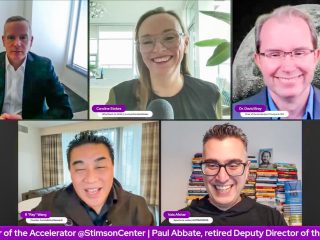
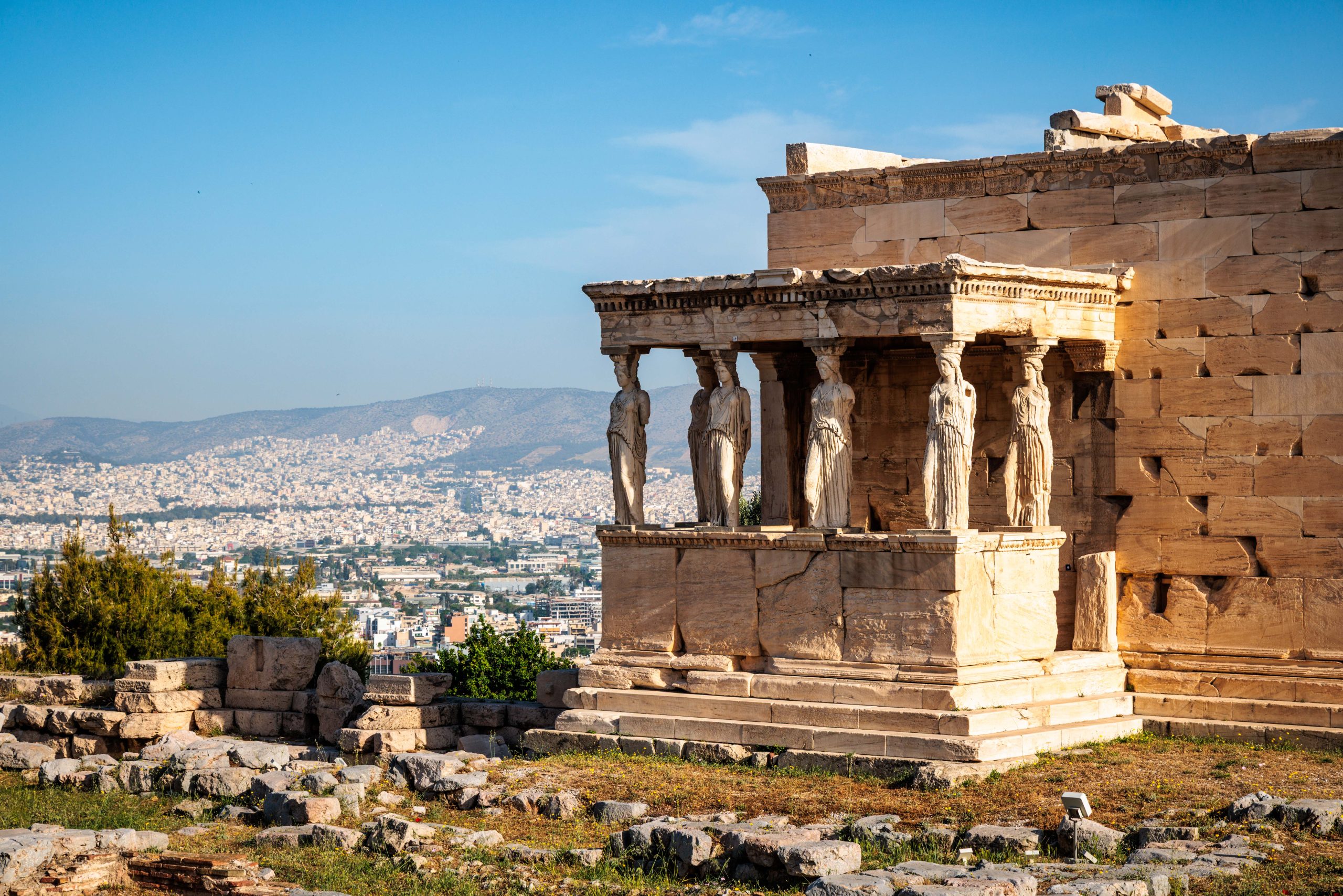
By Caroline Stokes, Author of AfterShock to 2030: A CEO’s Guide to Reinvention in the Age of AI, Climate, and Societal Collapse
Dear Tim, Till, and everyone who attended the World Beautiful Business Forum,
I will need to read your Philosophy Speed Dating article a few more times. In the meantime, here is my love letter to the House of Beautiful Business and its forum in Athens.
On purpose, I took my time getting to Greece. I started from my home of 20 years in Vancouver and flew to London — the capital of my birth country — to walk and dine among hundreds of years of history and to see the finance centre next to the gentrification of Old Borough Market. The highlight was the West End show Operation Mincemeat, a true World War II cognitive warfare story with jazz hands.
Then on to Paris — more history — for a business mastermind.
The road insisted I take one bucket list detour — Rome — to try to understand the power dynamics from thousands of years ago and how they evolved.
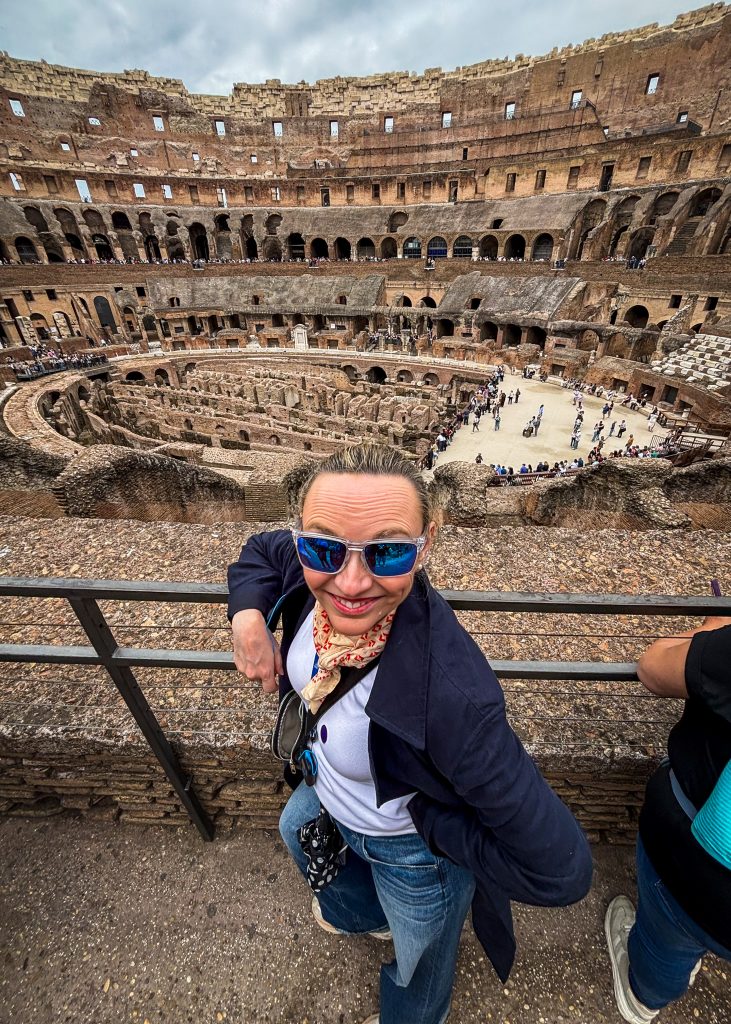
The life-defining and slow penny-drop moment was standing at the Colosseum, listening to our historian guide Giuseppe describe the thousands of enslaved Jews captured from Jerusalem who built it.
I realized we are still here — just with bigger toys, higher stakes and the whole world persistently on an existential edge.
In Vatican City, I heard about the Borgia family for the first time and felt my mouth drop as I connected the dots to what we are now witnessing in the Trump era.
What I felt was an echo of Western history on a loop — a simulation of how we continue to do things. It didn’t feel good then, and even now as I write this, my heart and stomach sink.
Much like Sid Meier’s popular video game simulation Civilization, we really are repeating the same mistakes. But I don’t think Civilization had quantum technologies, AI acceleration, population explosion, climate crises, space economies and a social media environment that resembled the Colosseum-level distraction economy for us modern-day plebs.
As I write in my book, we numb or isolate ourselves, or resort to outrage in social media circles, to avoid the challenges we face in which we freeze, or fight against each other. Social media is the digital Colosseum. And I needed Athens to bring forward the people making the changes along with answers in progress.
In a way, the answers came but they weren’t packaged in a $99, all-you-can-eat format to be deployed by an AI agent to change the world in 47 seconds.
Instead, it required quiet observation; many steps to consume and understand each talk to inspire growth; much thought; processing and listening to another person’s specialty, line of inquiry and perspective. And sitting quietly not knowing the answers; stopping on purpose to learn, even with the change-makers in the room with their own opinions and philosophies.
The road to Athens required a lot of cognitive thought — because complete answers to systemic, existential, geopolitical, technological and climate chaos threats are rarely packaged in a format fitting our current attention spans. Truth is, will we ever fully understand? Do we need to understand? Do we just need to understand ourselves, as humans in this operating system, to evolve?
So, here’s my report.
Let’s start at the very beginning.
The Lonely Road
The road to Athens began with my book launch last summer. I was restless to find “the others” who also thought in any of these strands — AI, climate, and societal collapse — or the full-on synthesis of this movement and what CEOs, leaders could do if they really wanted to.
At book launch time, I felt a bit lost, just like any author does. But when I read Otti Vogt’s LinkedIn post that he would be at the House in Athens, I knew this was the road I needed to be on. If it wasn’t for Otti, I wouldn’t have found this road, and I wouldn’t be writing this love letter.
Impatient to wait nine months, I noticed that the Artificiality Summit in October 2025 would provide the necessary stopgap for human-to-human time and help to satisfy my hunger for knowledge on how we will evolve and support each other in the process.
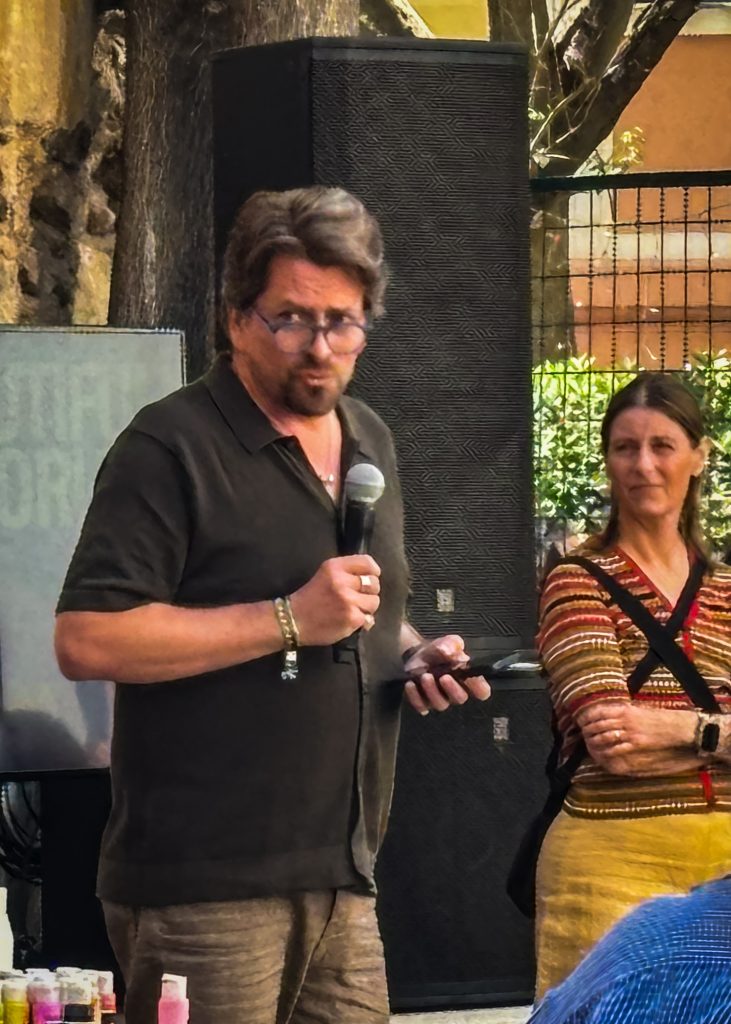
What came from that summit was a perfectly-sized event from Helen and Dave Edwards. Despite my education at MIT on AI for Business Strategy, I had my most transformative realizations from both Blaise Agüera y Arcas and Benjamin Bratton on the AI stack (from 2016), AI grief (from 2024) and many other talks providing a preview on what the future holds relating to human and synthetic intelligence, and democracy. Frankly, very few are curious or ready to research or understand this without protest — hence a gurgling sense of AI grief further exacerbated by social media algorithms.
Just as in my 2019 TEDx talk urging people to be curious about AI and to develop emotionally intelligent organizations around it, today I urge them not to shut down amid that scary sensation of grief. Instead, I ask them to face it head on and learn from as many of their understandings and foresight that are already in progress.
We’ve been in symbiosis mode for a while now, or what I like to call the Fifth Industrial Revolution, in which humans and AI work together symbiotically within planetary limits. We are just at the beginning and have a long way to go.
The gap between November and May in the Pacific Northwest was a long one. If you’ve ever spent any time in Seattle or Vancouver, you’ll know how hard it is to be inspired when enveloped in persistent, grey rain and long, dark nights.
I tried filling my restless mind with intelligent guests on my podcast AfterShock: Leadership for the Fifth Industrial Revolution (HoBB partner Helen Edwards episode here); and filling my time with Fortune 500 client work with my typical 100-day programs for CEOs needing their C-suite to reinvent their North Star, plus an MIT New Space Economy course at precisely the same time that data centres in space became the new outrage not about Planet B. But nothing was really satisfying my need to breathe the same air space as “the others”.
Where were they?
Finding Your People
There is actually nothing better than finding “your people” in real life. Mostly it’s a sense of relief, and I metaphorically kissed the ground knowing my work isn’t delusional. More importantly, it’s seeing how other people’s ideas build on your own, or ideally expose some big gaps to learn from. Even better and measurable, when something inspires you to do something about it.
But I know these people are everywhere — they just don’t know how to express it.
This is going to sound odd, but I have always been fascinated by IRL external avatars intermingling with ones’ own internal avatars. Because everyone has a dance. You know, the masks we present while we process data and interactions with our own belief systems. Seeing each persona do their thing and watching our own reactions to how one shows up, depending on the signals and messages consciously or unconsciously noticed. Just fascinating.
You don’t quite see the real stuff in a Zoom, a LinkedIn post, a tweet, a meeting room or even a 1:1 office setting when pitching, reviewing the compatibility of something, or defending a position for development. You really get to see people. And it was brilliant.
It’s when we listen to people speak and we discuss it with the person next to us, that we gain new perspectives and new neurons are formed. That leap builds whatever comes next. And everyone’s discovery web will be different based on our own unique experiences.
For me, that’s just the tip of the iceberg of the relational experience, and I think it’s true for so many other people as I keep reading other HoBB attendees admit that they are going to take a long time to digest — because the rest of the world hasn’t had the opportunity to co-exist in such a vulnerable, learn-it-all state. Yet.
What I learned from the other attendees is that we are all the same, but different. All part of the same pie. All on the same mission — and I don’t think everyone knew that. I saw the full spectrum of people doing the mission in different ways. I couldn’t put my finger on it exactly, but everyone’s offering or unique strand had a place in my book and the collective of the new leadership movement.
The House and its attendees created something very rare: a space that made us more human, precisely so we could tackle the challenges of this inhuman time.
A good frame of reference is the old paradigm of leadership which motivated me to write my book with “Pussy Riot energy” because I could see the old leadership system wasn’t going to save any of us. What followed earlier this year was a series of poems by Kenneth Mikkelsen. It’s a very long read, but you will find yourself nodding along wondering how you’ve permitted yourself to be part of the toolset of that reality. May the old leadership paradigm and leadership theatrics RIP and reinvent themselves into the new movement of humanity and dignity for all.
So maybe that was it? I witnessed most of us in that new paradigm. We weren’t in Athens dancing to the old leadership tune. We were learning a new script, intention and way of working and being.
Maybe we didn’t feel so alone after all?
Maybe we weren’t used to feeling so safe in our ability to say what we needed to say for this new world?
Kenneth Mikkelsen’s work might be too woke for your taste. If so, try Bullshit Jobs by David Graeber, if you’re curious to understand more.
The Wilderness
With a stunning late-night view of the Acropolis, we spent an evening at the Maria Callas Museum discussing the undiscussable: loneliness. My first chapter in my book is about CEO life being lonely, so I needed to witness what other people were saying in public.
Of course, there was the CEO who said he never felt lonely — in line with the one in five CEOs denial data point from Harvard Business Review. I’m not sure why he was on the panel.
Whereas another participant, who won’t be named under the Chatham House Rule, described the loneliness project they’d been building since leaving the HoBB community several years ago. They observed that loneliness comes in different forms that we don’t like to talk about publicly for fear of being shamed, or ostracized: the loneliness of feeling politically rootless; the loneliness of being in a relationship and still missing a part of yourself; the loneliness of leadership. Loneliness is hard to package up. It’s complicated, isn’t it? And it makes us feel weak and judged.
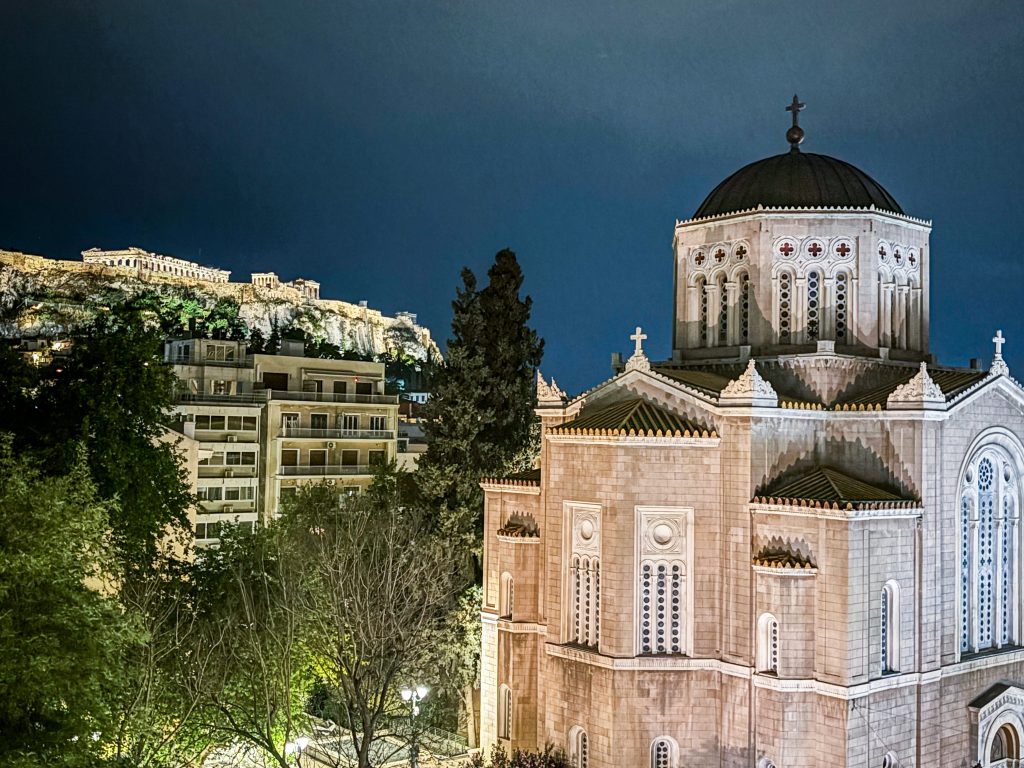
Our host invited us toward a new idea: the wilderness — the idea that we are always alone and always in some form of relationship at the same time. And that loneliness is one of our most common shared experiences, which is painfully stigmatized as a condition, a label, or a diagnosis we put on — pay attention to this — other people instead of doing the work on ourselves. Because the self-work is a life-long project, and being distracted and goal-oriented helps us run away from ourselves.
There was also a senior VP from a major tech firm who had lost her job just three weeks before arriving. She said she had deleted Slack with delight and yet still hadn’t figured out how to feel less lonely with, or without it.
So, what I learned about this was that I too had been very lonely and that’s why I needed “the road to Athens”. And that knowing there are others focused on the same movement dancing a new dance we’re all going to learn in the coming years, I became less lonely.
And I now know there are a thousand other people just like me, all in the same boat and I can reach out to them any time thanks to the House of Beautiful Business. Again, thank you, Till and Tim.
Capitalism is the distraction of leadership
We have a few crises playing out. The climate crisis crippling global communities and economies. The AI gold rush and power grab of this decade, making the internet rush in 2001 almost look like kindergarten.
Having completed MIT’s New Space Economy certification this year, I understand that compute and energy needs will only increase amid the underplayed AI war between the US and China, alongside the uncoupling of Europe, while the rest of the world builds their own sovereignty and resilience. Because globalization as we knew it is dead.
There are some good news stories from the new space economy such as improved Earth observation — but only if we can rely on governments, institutions and organizations to find the will and the way to collaborate simultaneously without bureaucracy roadblocks. Which is the problem all leaders need to solve with urgency.
‘Don’t Be a Dick’
It was just after my book launch that I first discovered Luke Kemp and his work on civilizational collapse in The Guardian, in which he’s quoted as saying “Don’t be a dick.” In Athens, he explained matter of factly what stakes we’re under by walking us through 5,000 years of societies that collapsed for the same reasons: monopolized weapons, lootable resources, caged populations.
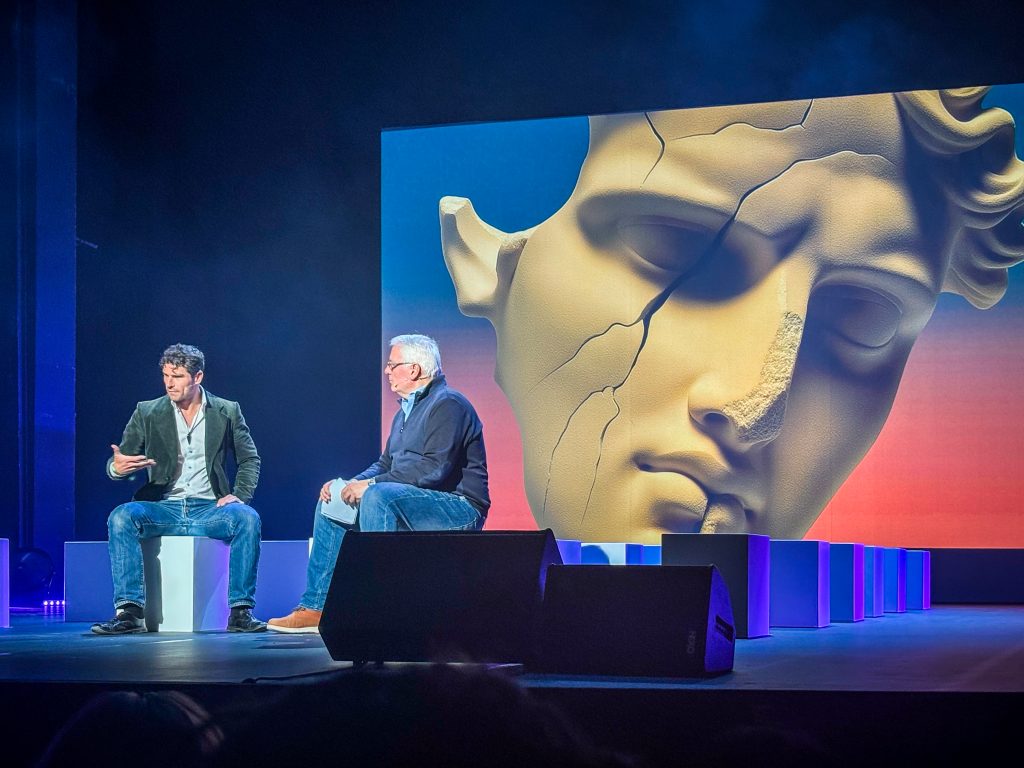
The Colosseum I had just visited was evidence. So were the rooms I had just sat in, in Paris and Rome. He said, “We’re clearly in a global Goliath right now, but we’re moving towards a silicon Goliath — a supercharged, technologically enhanced new dominant order. Wealth inequality is clearly enormous. The usual indicators of collapse are all present. Polarization. Democratic backsliding. Loss of trust in public institutions.”
Concerned that he might come across as hopeless when we need to grasp a future worth waking up for, Kemp kept pointing out that collapse — as terrible as it is for emperors and elites — has historically been a relief for the 99%. That the historical record is written by the 1% who had the most to lose and that another democratic future is possible. While listening, I confess, my immediate thought was whether I would see that democratic future in my lifetime. Probably not, but as I write in my book, the work we do today will help our children’s children breathe clean air. This is the long game.
Celebration?
I’ve been told by two people that HoBB is a celebration, not a venue like Davos — where the big finance, private jets and money live.
From spending time at the House, I interpreted that to mean no-one buys influence and no single organization is represented there. For instance, I didn’t see a mining company representative, or anyone from big gas, or fintech. Or a headliner from big tech or social media for us all to witness to justify HoBB’s standing in the event community.
I also don’t recall hearing “this talk is sponsored by…” which is so prevalent at Western events. I had a hunch that the Big Four didn’t want to bring the human into their organization, or they’d have been there. I suspected that if their clients got wind that their brand could be associated with the very things compounding the polycrisis, it would dilute. And that’s the old leadership paradigm.
So, what HoBB has been doing these past 10 years is purposely breaking up with that and reinventing a new norm.
In comparison, TED talks and interviews are screened and edited for content. That’s why rooms like the House of Beautiful Business exist — to provide a status update, without the media lens, and for us all to work out what we need to do next. So I can see why the World Beautiful Business Forum branded itself “the most human gathering for the more-than-human world”.
The Undersea War
I spend a lot of time listening to Elisabeth Braw, senior fellow at the Atlantic Council and the author of Goodbye Globalization.
Did you know that the majority of global internet traffic and data run through cables on the seabed?
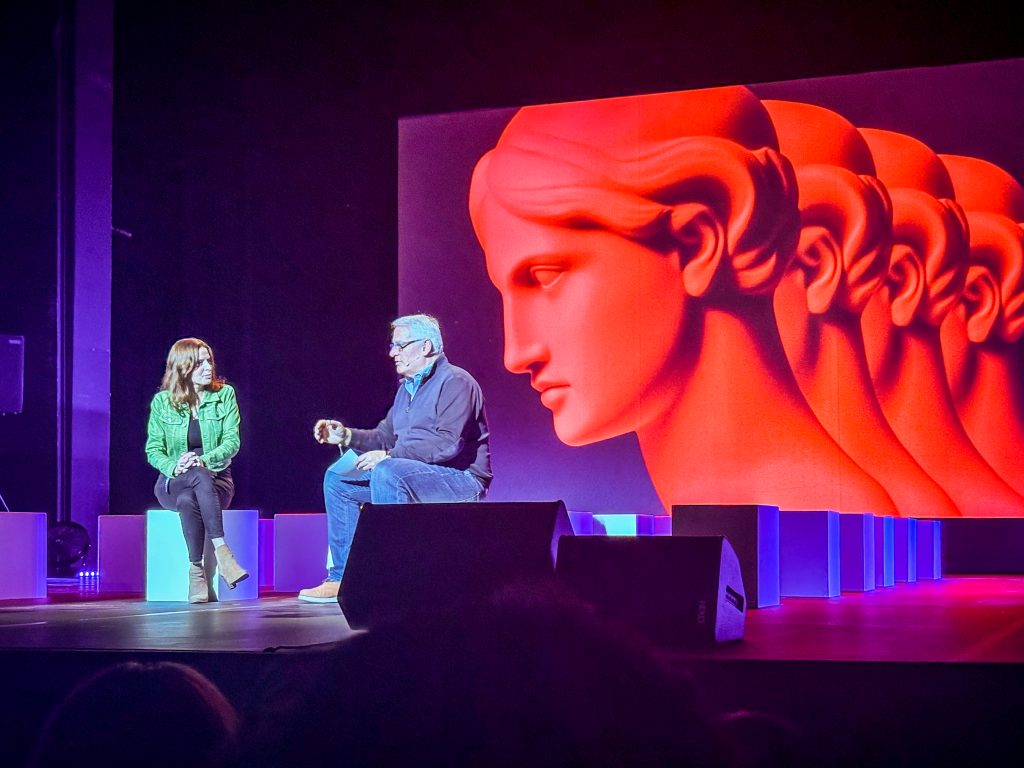
She told us, “The countries have agreed not to harm them, not because any country is virtuous, but because they have realized that they too depend on it. That agreement no longer seems to be in existence.”
There’s been a gentleman’s agreement, essentially, holding it all together. That agreement is being jeopardized by ongoing wars. On stage, Elisabeth told us that Russia had been recruiting gig economy workers through Telegram to commit sabotage. And that Iran had recently reminded the world that there are cables running through the Strait of Hormuz that power communication capability in various countries.
For the many pondering how Space X’s satellite system is going to ruin the night skies, through what I’ve learned at MIT and from Benjamin Bratton, we are, in part, building a new communications system in space in the event these undersea cables are sabotaged, so you can still call your mom.
Maybe space is the Plan B, because as Bob Hoskins said in a 90s BT ad, “It’s good to talk.”
Beware the Tech Prophecies
Oxford University philosopher and author of Prophecy Carissa Véliz reframed predictions for us as veiled commands. So, when a tech billionaire says AI will make retirement obsolete, they are issuing an instruction to all of us and the media sure love to amplify it. And when we receive this as fact from the media, we are obeying in advance through fear.
She said, “Every time these people say that AI is very powerful, that it’s going to destroy your job, destroy democracy, destroy your world — what they’re trying to do is get you so scared that you’ll run into their arms and say, ‘Please, save us.’ Never mind that they are the ones creating the problem.”
Be a philosopher, she said. Philosophy was born as a reaction — as a voice of reason in the face of divination, myth, and manipulation. It’s our turn again.
But how to become a philosopher when we’ve been trained for capitalism, corporate power structures, consumerism and simply paying the mortgage and raising the kids when everyone is concerned they’ve been building their next version of Adolescence?
Try reading The Burnout Society or choose from the suggested reading list in the back of my book.
Service in Wartime
I went for my Stretch Lab session yesterday. Ever since working on a typewriter, and then computer since the age of 15, I require the kind of stretching that needs manual wrenching.
A new practitioner worked on me, and as usual with predictably sweet small talk, she asked, “What do you do?”
It’s taken me a while to learn not to overwhelm people with the title of my book and line of work I’m in, so I just say I’m a writer helping leaders adapt in this new age.
While she was contorting my body, without hearing any guilt or shame in her tone, she quite happily said that she has no idea what goes on in the world and chooses not to.
I didn’t mock her like some people mock me for avoiding the news (tl;dr: it’s the same time and time again and who can handle that kind of stress anyway unless you’re a politician or make vast amounts of money from the cycle?) Instead, I replied “good”, because she’s providing something the rooms full of brilliant strategists aren’t.
She helped me move my body so it didn’t become more tense, so I can support others without my body feeling pain — so my body can thrive to support others. Which, if you think about it, is quite a radical act in the capitalist world, as my costly medical insurance company won’t cover this necessary expense.
Just as I was being stretched over a table in a compromising and likely embarrassing position, I thought of my grandmother during the Second World War. She watched for fires caused by bombs on the top of Welwyn Garden City’s John Lewis building so the emergency services could be dispatched. She was doing her part, one of the many strands of that time to save the community and humanity during a war. The Stretch Lab practitioner, too, was providing a service — making sure my body could move fluidly through the world that is designed to kill us.
You might have thought that this isn’t affecting you.
In my 2025 book, I explained, “We are all operating on the edges of war, where security of the commons is no longer a distant concern — it’s a direct factor shaping business”. I added, “Geopolitical and economic upheavals will impact organizations and society.” But how do we adapt our mindsets for civilizational systems changing before our eyes, and when the media amplifies the voices stressing the people who need to support each other and to find a new way?
What I know is this: sitting with the HoBB community made me realize that we are all on the same mission, moving at different speeds, occupying different parts of the terrain. Holding space and guiding for people also on different parts of that terrain — without pulling them toward the dark side of complaint, outrage or apathy, or losing urgency — might be the greatest leadership challenge of this time.
We all need to move faster. Get wiser. Make better decisions. Ask better questions. Stay curious — as a collective. Athens made us do that.
With special thanks to the people I spoke with — and most of all for what I didn’t hear. In a world of shocks, the House and its attendees created something very rare: a space that made us more human, precisely so we could tackle the challenges of this inhuman time. So much so, I spent my R&R time in Hydra creating a dedicated program for women navigating reinvention in an era of compounding shock. I want to help them face the new or hard questions and move forward in our rapidly evolving terrain. To become shockproof.
I waited nine months and it was worth it.
With gratitude and momentum,
Caroline Stokes
Reinvention strategist in the age of AI, climate, and societal collapse.
Author, AfterShock to 2030 and Elephants Before Unicorns.