
Why the romance of the early space race is hiding a massive business shift happening right now.
By Caroline Stokes, Author of AfterShock to 2030: A CEO’s Guide to Reinvention in the Age of AI, Climate, and Societal Collapse
In Florida this week, I missed my first chance to see a Falcon 9 “jellyfish” from Cocoa Beach. I quickly consoled myself and made my way to Kennedy Space Center to experience a different kind of awe.
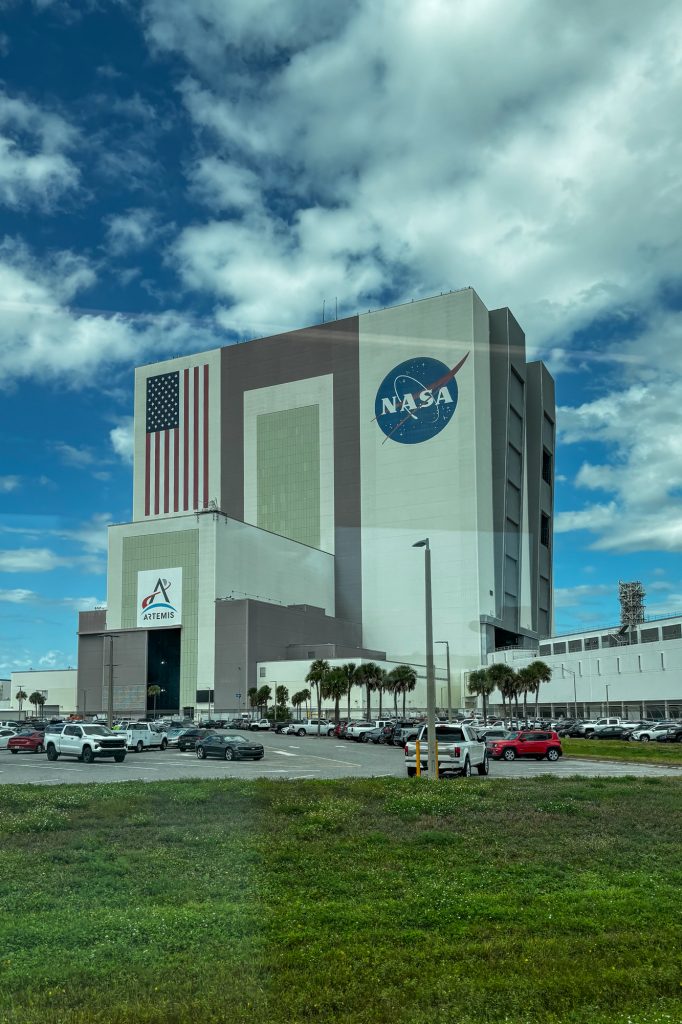
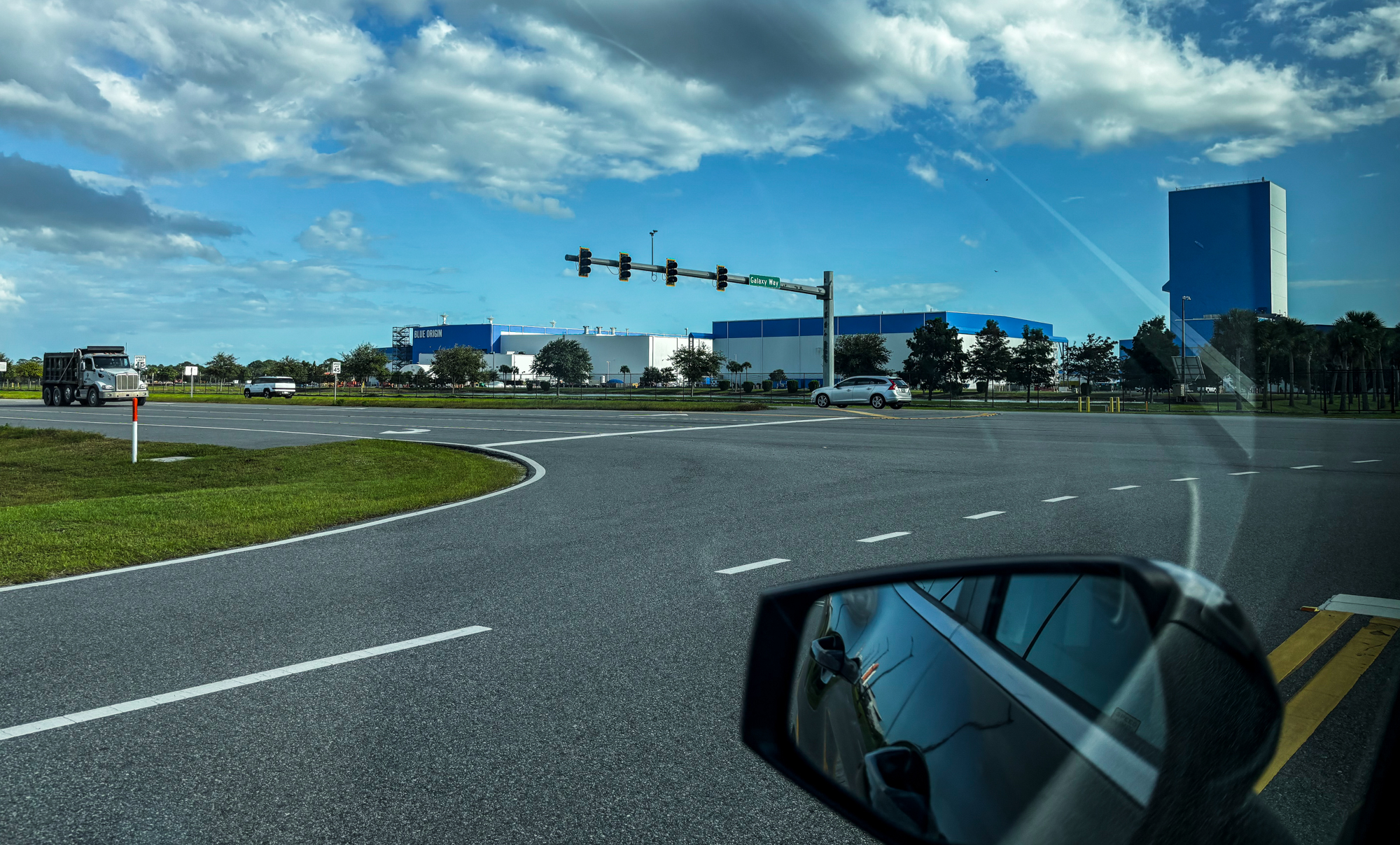
I drove by Blue Origin’s campus outside the KSC complex and, while on tour, looked towards SpaceX’s new Gigabay. The scale is incredibly hard to capture: millions of square feet of manufacturing and processing. For perspective, on NASA’s Artemis Vehicle Assembly building exterior, one single stripe of the American flag is the width of the road we were driving on.
While very educational and insightful, KSC romanticized the hard graft of space exploration. I’m not sure this would be Nathan Fielder-approved (see the finale of Season 2 of The Rehearsal). Orchestral scores swept us along; there were wonderful tributes to the early pioneers, alongside a carefully curated sense of history. The exasperation of pioneers solving unseeable problems was glossed over beautifully.
At one point, I realized this is what EPCOT could be at Disney World and how many people aren’t aware of or ready for what the new space economy is and will become. KSC felt like a ride celebrating the history of space exploration. I realized I had expected access to a more future-forward environment there.
Earlier this year, I completed MIT’s New Space Economy professional certification to understand and build concepts on the complex economy within the new space race. It was the hardest intellectual work I’ve ever done. Shoulder to shoulder with space engineers, founders of space companies and brilliant instructors, it forced me to think differently about how planetary intelligence can be used by businesses. From a neuroplasticity perspective, my brain changed. KSC confirmed it. The romance of the first space race, despite its engineering achievements and human tragedies, still shapes how many people think about space. That’s where most of us will likely be stuck.
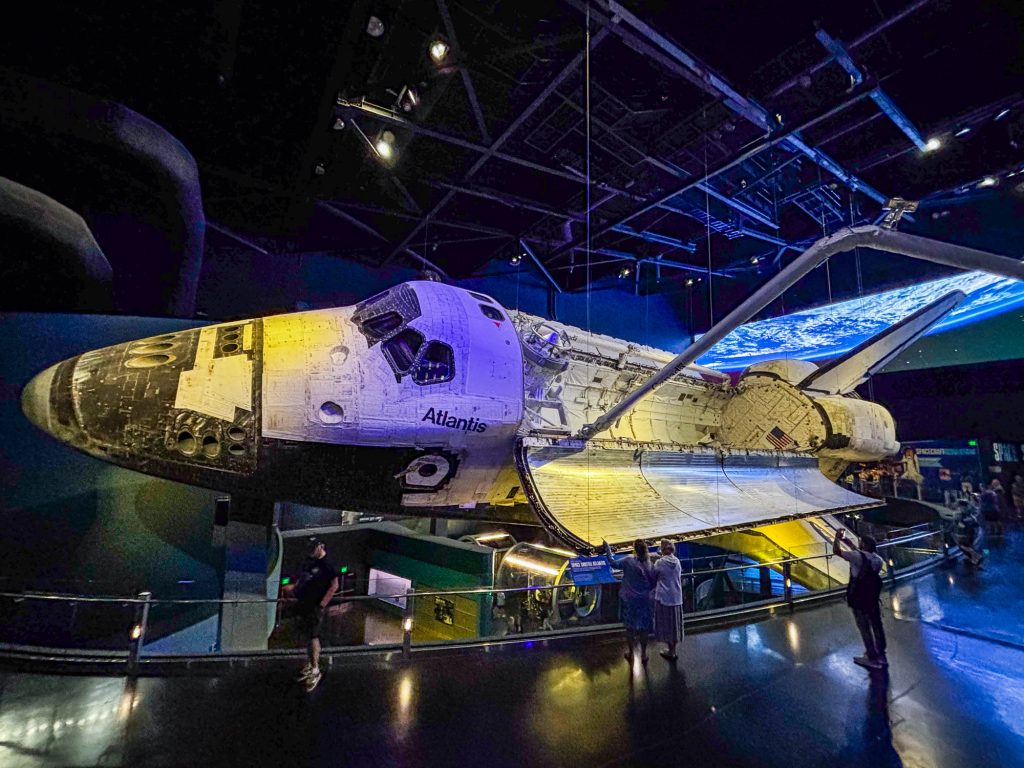
The Space Shuttle took nine years from public announcement to its first flight. So when we have that long to get used to an idea, we simply acclimate to that new reality. We would have looked on in wonder when, by 1983, there were four flights in a year. It was also a year of firsts: Challenger’s debut; the first American woman in space, Sally Ride; the first African American in space, Guion Bluford; and the beginnings of the first Spacelab. It was not until 2000, almost two decades later, that the International Space Station became fully operational. That was a nice, comprehensible, palatable sequence for all of us.
Today is a different kettle of fish.
SpaceX launched 165 Falcon 9 rockets last year and reached 100 this year by late August, including two launches just 38 minutes apart. This velocity baseline constitutes a culture shock, and most of us jump to negative conclusions about it.
We’re familiar with the objections: satellite trails are “ruining the night skies”, space debris is reckless, and billionaires are delusional, wanting to take us to “Planet B” when we should be focusing on Earth. Yes to all of that.
At the same time, new satellites already underpin communications, navigation, Earth observation, planetary intelligence and the kind of resilience and security that most of us take for granted. That velocity is creating real whiplash for businesses, leaders, and the systems we rely on. I recently spoke with a future-forward CEO who has invested in space debris cleanup — so I hope it’s good to know that the practical problems are being worked on even as the cadence accelerates.
Reading recommendations
In lieu of a deep dive into the new space economy via MIT, here’s some relatively new reading:
Last year, on episode 17 of my podcast AfterShock: Leadership for the Fifth Industrial Revolution, I interviewed Darrell M. West of the Brookings Institution. His new book, Claiming the Cosmos: Who Owns the Final Frontier?, may have many answers and help you understand where we are now and where we are going. It’s available for pre-order.
On the flight over to Florida this week, I sat next to a business leader in space exploration. In the time it took for us to get to know each other, he felt confident I would enjoy this book by Kelly Weinersmith and wanted to share it with you too: A City on Mars: Can we settle space, should we settle space, and have we really thought this through?
In the meantime, I’ll be at IEEE-USA’s Big Thinkers in Orlando this weekend, opening up their event and providing in-residence performance coaching for engineers powering our new world.
If this is something you want for yourself, I’ll soon be announcing details of two new services:
AfterShock Labs:
Protected time for CEOs to step out of the day-to-day and experiment with what actually changes the trajectory. Anonymized dual-horizon laboratory at the Michelin-recommended Canyon Ranch, Tucson. Limited to five CEOs per Lab. Inquire to learn more and for available dates in 2026 and 2027.
AfterShock Performance:
For leaders who want to bring renewed performance into their organization around a new mission. Hybrid (online and in-residence) 100-day program focused on integrating short- and long-term dual-horizon thinking. Contact me if this is something you might need in the coming months.